


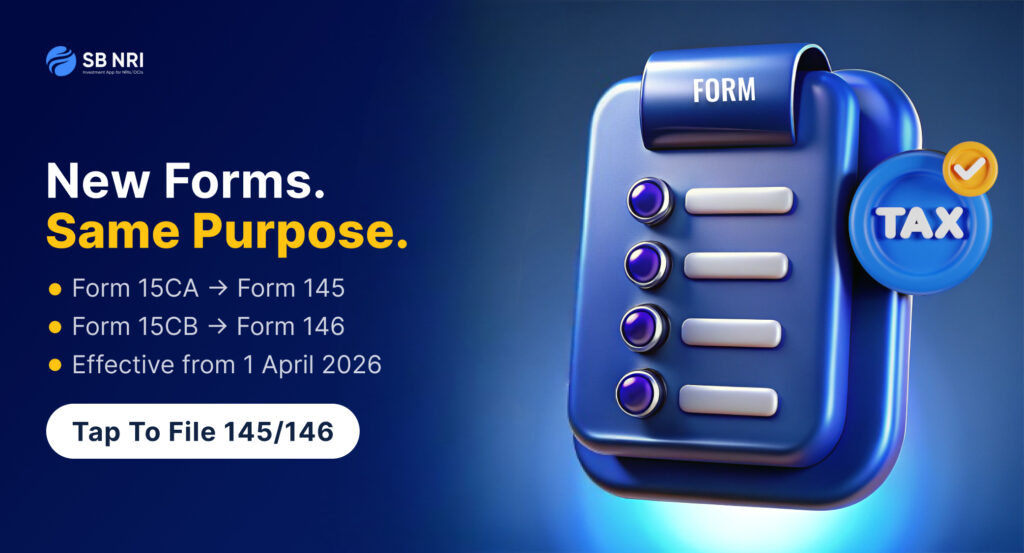
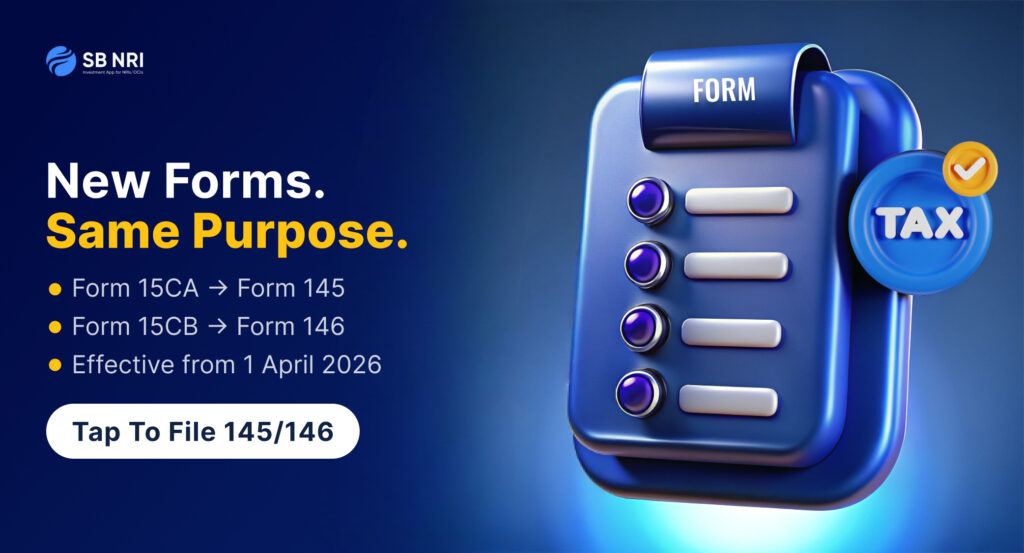
Cross-border remittances from India have entered a new compliance era. From 1 April 2026, the familiar Form 15CA and Form 15CB have been replaced by Form 145 and Form 146 under the Income-tax Act, 2025.
TL;DR
- Form 15CA has been renamed Form 145.
- Form 15CB has been renamed Form 146.
- The change is effective for remittances made on or after 1 April 2026.
- The core compliance requirements remain largely unchanged.
- Form 145 must be filed before making certain payments to non-residents.
- Form 146 is the Chartered Accountant (CA) certificate required in specified cases.
- The ₹5 lakh threshold remains broadly similar to the earlier regime.
- NRIs remitting funds abroad should ensure they use the new forms to avoid delays and compliance issues.
If you need assistance with Form 145 filing, Form 146 certification, DSC-based verification, or Aadhaar OTP-based e-verification, our experts can help simplify the process and ensure error-free compliance.
Why Were Form 15CA and Form 15CB Replaced?
The Government of India introduced the Income-tax Act, 2025 to modernize and simplify tax legislation. As part of this transition, several tax forms received new numbering.
Under the new framework:
- Form 15CA → Form 145
- Form 15CB → Form 146
The Income Tax Department has clarified that these forms are the corresponding replacements under the new law and are applicable for remittances made from 1 April 2026 onward.
Importantly, this is not a complete overhaul of the foreign remittance compliance process. For most taxpayers and NRIs, the objective remains the same: ensuring that taxes applicable on payments to non-residents are correctly determined, deducted, and reported before funds are remitted overseas.
What Is Form 145?
Form 145 is the new version of Form 15CA.
It is a declaration that must be furnished before making certain payments to a non-resident individual or a foreign company. The form helps the Income Tax Department track foreign remittances and verify whether applicable tax obligations have been met.
The form is filed by the remitter and includes details such as:
- Remitter information
- Recipient details
- Nature of remittance
- Amount being remitted
- Tax deduction details
- Purpose of payment
- Relevant supporting information
According to the Income Tax Department, Form 145 must generally be filed before the remittance is processed.
Also read: ITR-2 vs ITR-3 for NRI F&O Traders: Which Return Should You File?
What Is Form 146?
Form 146 replaces the earlier Form 15CB.
This is a certificate issued by a Chartered Accountant that certifies:
- The nature of the payment
- Taxability of the remittance
- Applicable provisions of Indian tax law
- DTAA (Double Taxation Avoidance Agreement) benefits, if any
- Correct tax withholding requirements
The CA examines the transaction and certifies compliance before the remitter files Form 145 in cases where such certification is required.
For many NRIs, Form 146 continues to be a critical document when repatriating funds such as:
- Property sale proceeds
- Rental income
- Professional fees
- Business payments
- Other taxable remittances

Effective Date: When Do the New Forms Apply?
The Income Tax Department has clearly stated:
- Form 15CA and Form 15CB remain valid for remittances completed before 31 March 2026.
- Form 145 and Form 146 apply to remittances made on or after 1 April 2026.
Therefore, NRIs and businesses should ensure they use the correct forms based on the date of remittance rather than the date on which the underlying transaction originated.
Has Anything Changed Apart From the Name?
The biggest question among NRIs is whether this is merely a renaming exercise or a substantive compliance change.
Based on official guidance, the answer is: mostly a renaming and restructuring exercise.
The Income Tax Department has clarified that the substantive requirements remain broadly similar, including:
- Reporting foreign remittances
- Obtaining CA certification where required
- Ensuring TDS compliance
- Following prescribed thresholds
The ₹5 lakh threshold framework also remains substantially similar under the new rules.
However, the new forms introduce certain procedural improvements and standardization measures designed to streamline reporting.
Structure of Form 145
Form 145 is divided into four parts.
Part A
Applicable where:
- The remittance is taxable; and
- The aggregate amount during the financial year does not exceed ₹5 lakh.
Part B
Applicable where:
- The remittance exceeds ₹5 lakh; and
- A certificate has been obtained from the Assessing Officer.
Part C
Applicable where:
- The remittance exceeds ₹5 lakh; and
- Form 146 has been issued by a Chartered Accountant.
Part D
Applicable where:
- The remittance is not taxable under the Income-tax Act, 2025.
This structure closely resembles the earlier Form 15CA framework, making the transition easier for taxpayers already familiar with the process.
How Does This Impact NRIs?
For NRIs, the practical implications are significant because Form 145 and Form 146 continue to be key documents for many outward remittances.
Common situations where these forms may be relevant include:
1. Repatriation of Property Sale Proceeds
NRIs selling property in India often need tax certification before transferring proceeds abroad.
2. Transfer of Rental Income
Rental income earned in India and remitted overseas may require compliance under the applicable remittance provisions.
3. NRO to Overseas Account Transfers
Many banks request remittance-related tax documentation before processing outward transfers from NRO accounts.
4. Payments to Foreign Vendors or Consultants
Businesses and professionals making overseas payments must continue to assess withholding tax obligations before remitting funds.
Because banks and authorized dealers rely on these forms during remittance processing, incorrect filing can result in delays and additional compliance scrutiny.
Key Benefits of the New Framework
While the compliance objective remains unchanged, the new framework offers several advantages.
Better Standardization
The forms are aligned with the structure of the Income-tax Act, 2025, creating consistency across compliance processes.
Reduced Duplication
The Income Tax Department notes that under the new framework, obtaining the appropriate Assessing Officer certificate eliminates certain duplication that existed previously.
Improved Reporting
The revised format includes more structured reporting fields, helping reduce ambiguity and errors.
Enhanced Digital Compliance
The forms are integrated into the Income Tax Department’s e-filing ecosystem, supporting electronic filing and verification workflows.

How to File Form 145
The filing process generally involves:
- Determining whether the remittance is taxable.
- Identifying the applicable part of Form 145.
- Obtaining Form 146 from a Chartered Accountant if required.
- Filing Form 145 on the Income Tax e-filing portal.
- Completing e-verification.
- Submitting the acknowledgement to the bank or authorized dealer before remittance.
To avoid rejection or delays, taxpayers should ensure that remittance details, tax calculations, DTAA claims, and supporting documentation are correctly prepared.
Why Professional Assistance Matters
Many remittances involve complex tax considerations such as:
- DTAA benefits
- Capital gains taxation
- Property sale transactions
- TDS applicability
- Documentation requirements
Errors can delay remittances and lead to compliance issues.
Our team assists NRIs and businesses with:
- Form 145 filing
- Form 146 certification support
- DSC-based filing and verification
- Aadhaar OTP-based e-verification
- Remittance compliance review
- NRO account repatriation documentation
Whether you’re transferring property sale proceeds, rental income, or other funds abroad, professional guidance can help ensure smooth processing.
Conclusion
The transition from Form 15CA/15CB to Form 145/146 marks an important procedural update under the Income-tax Act, 2025.
For NRIs, the good news is that the underlying compliance framework remains largely familiar. While the names and statutory references have changed, the fundamental objective remains the same, ensuring proper tax reporting and compliance before foreign remittances are made.
As remittance regulations continue to evolve, staying updated and filing the correct forms can help avoid delays, penalties, and unnecessary complications.
If you’re planning an overseas remittance, now is the right time to understand Form 145 and Form 146 requirements and ensure your documentation is in order.
FAQs
Is Form 15CA completely discontinued?
Yes. For remittances made on or after 1 April 2026, Form 145 replaces Form 15CA under the Income-tax Act, 2025.
Is Form 15CB now called Form 146?
Yes. Form 146 is the new equivalent of Form 15CB.
Do NRIs still need a CA certificate?
Yes, where the applicable rules require CA certification, Form 146 serves as the replacement for Form 15CB.
Has the ₹5 lakh threshold changed?
The Income Tax Department has stated that the thresholds remain broadly similar under the new framework.
Which forms should I use for remittances after 1 April 2026?
You should use Form 145 and Form 146, as applicable.
Can Form 15CA/15CB filed before 31 March 2026 still be used?
Yes, forms filed for remittances completed before the transition remain valid according to the Income Tax Department’s guidance.


