

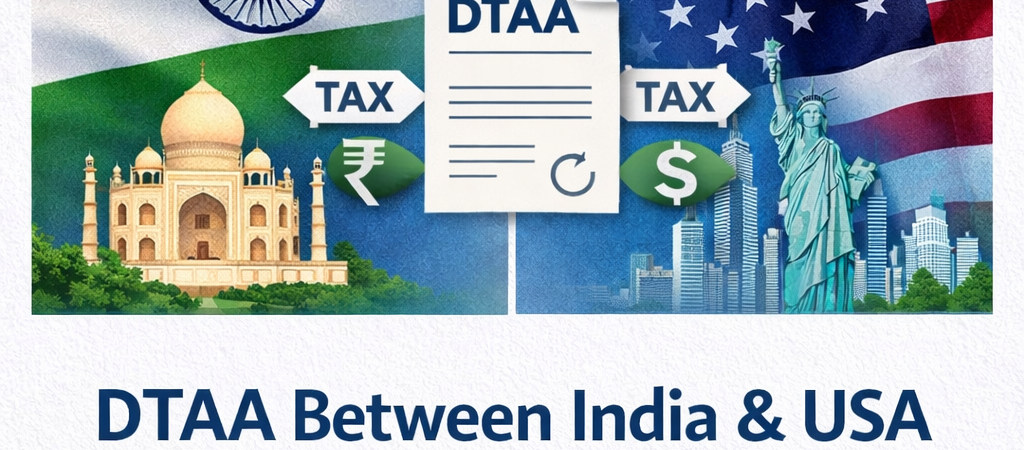
If you’re an NRI in the United States earning income from India, one of your biggest concerns is paying tax twice — once in India and again in the US.
This is exactly what the DTAA (Double Tax Avoidance Agreement) between India and the USA is designed to prevent.
📌 Short Answer
The India–USA DTAA allows NRIs to avoid double taxation by either claiming a foreign tax credit or applying specific tax rules that ensure the same income is not taxed twice.
What is DTAA Between India and USA?
DTAA is a tax treaty between India and the United States that ensures:
- Income is not taxed twice
- Tax liability is fairly divided between both countries
- NRIs can claim relief through credits or exemptions
👉 In simple terms:
You don’t have to pay tax twice on the same income if you follow the correct process
Types of Income Covered Under DTAA
1. Salary Income
- Taxed in the country where services are rendered
- If working in the US → taxed in the US
2. Interest Income (FDs, Savings)
- Taxed in India (usually with TDS)
- Can be taxed in the US
👉 Foreign tax credit can be claimed
3. Rental Income
- Taxed in India (where property is located)
- Also taxable in the US
👉 DTAA helps avoid double taxation
4. Capital Gains
- Taxed in India if asset is in India
- Reported in US tax return
5. Dividends
- Taxed in India
- Also taxable in the US
How to Avoid Double Taxation (Step-by-Step)
1. Pay Tax in Source Country (India)
If income arises in India, tax is usually deducted via TDS
2. Report Global Income in the US
US taxes residents on global income
3. Claim Foreign Tax Credit (FTC)
- Claim credit in US for tax paid in India
- Use IRS Form 1116
4. Use DTAA Provisions
Apply relevant DTAA articles to determine tax treatment
5. Maintain Documentation
Keep:
- TDS certificates (Form 16A)
- Bank statements
- Tax returns
⚠️ Common Mistakes NRIs Make
- Not claiming foreign tax credit in the US
- Assuming TDS = final tax
- Not reporting Indian income in US returns
- Filing incorrectly in India
- Ignoring DTAA benefits completely
👉 These mistakes often lead to paying extra tax unnecessarily
💡 Real Scenario
An NRI in the US earned ₹5 lakh interest from Indian fixed deposits.
- TDS deducted in India: ~30%
- He also reported this income in the US
If he didn’t claim foreign tax credit, he would end up paying tax twice
👉 With DTAA, he can offset Indian tax against US liability
🌍 Key Benefit of India–USA DTAA
- Prevents double taxation
- Reduces overall tax burden
- Ensures compliance in both countries
- Improves net returns
🤝 How SBNRI Can Help
DTAA sounds simple in theory, but actual implementation can be confusing, especially with multiple income sources and tax systems.
SBNRI helps NRIs:
- Understand India–US tax implications
- Apply DTAA correctly
- File ITR in India
- Avoid overpaying taxes
👉 So your tax structure is optimized across both countries
❓ FAQs
Do NRIs in the US have to pay tax in both countries?
Yes, but DTAA ensures you don’t pay tax twice on the same income
How do I claim DTAA benefits?
By claiming foreign tax credit and filing correctly in both countries
What is foreign tax credit?
It allows you to offset tax paid in India against US tax liability
Is TDS enough to avoid double taxation?
No, you must claim credit while filing taxes
🚀 Final Takeaway
The DTAA between India and the USA is one of the most important tools for NRIs to avoid double taxation and optimize taxes
But it only works if applied correctly
👉 If you’re unsure, SBNRI expert can save significant money and prevent compliance issues. Click Here


