

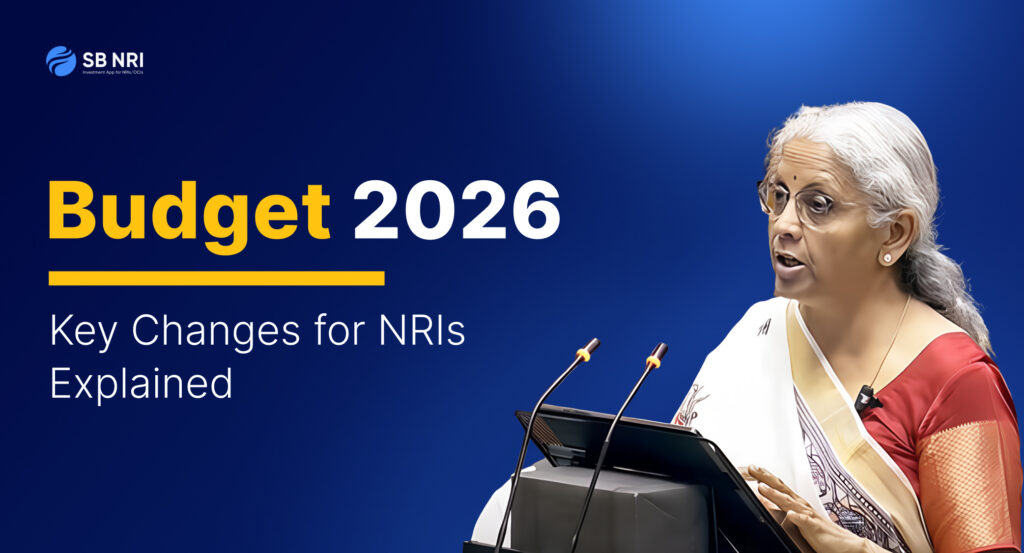
The Union Budget 2026 NRI impact marks a structural shift in how India wants to engage with its global diaspora. Instead of focusing only on tax rate changes, Budget 2026 for NRIs in India focuses on reducing operational friction while strengthening transparency through global tax data integration.
For NRIs who earn globally but invest, remit, transfer funds, sell property, or manage India-linked assets, this budget is less about short-term tax relief and more about making India financially easier to operate within over the long term.
When viewed together with Budget 2025, the direction becomes clearer. India is moving toward globally aligned NRI tax compliance India frameworks, while still encouraging NRI capital and investment participation.
The Big Policy Shift: From Remittance Economy to Global Indian Participation
Earlier NRI policies mainly focused on inflows. Today, India is building a system where NRIs can move capital, deploy money, invest seamlessly, and manage cross-border wealth with structured tax clarity.
Across Budget 2025 vs Budget 2026 NRI comparison, the direction is:
• Improve liquidity through better remittance rules
• Make India investments globally competitive
• Simplify NRI property sale tax India 2026 compliance
• Strengthen global tax transparency and reporting
What Budget 2025 Did for NRIs
Budget 2025 focused on capital movement efficiency and investment accessibility for NRIs.
1. Liquidity and Remittance Efficiency
Under NRI remittance rules India LRS TCS, key updates included:
• LRS TCS threshold increased from ₹7 lakh to ₹10 lakh
• TCS removed on education loan remittances
This improved liquidity for NRIs transferring funds, sending money overseas, and managing global obligations.
2. Investment and Tax Alignment Direction
Budget 2025 strengthened India’s positioning as an NRI investment destination.
• Capital gains alignment direction for NRIs
• Stronger focus on IFSC GIFT City tax benefits for NRIs
• Easier access to structured global investment platforms
Watch our Budget 2026 video for NRIs: 3 major changes in Property, TCS, and Foreign Assets.

What Budget 2026 Changes for NRIs
Budget 2026 builds on the 2025 foundation and focuses on operational ease plus global integration.
1. Foreign Income Tax Relief Framework
Under evolving NRI foreign income tax India rules, Budget 2026 introduces foreign income tax relief possibilities for eligible NRIs visiting India under notified frameworks.
Why this matters for NRI financial planning India:
• Reduces dual taxation exposure
• Encourages global professionals to engage with India projects
• Improves cross-border tax planning visibility
2. NRI Property Transactions Become Easier
One of the most practical NRI property selling rules India updates is simplified TDS compliance.
Buyers can now deposit TDS, complete compliance, and process transactions faster using PAN instead of TAN.
Real-world impact:
• Faster property sale execution
• Lower compliance friction
• Higher buyer confidence in NRI property deals
This improves liquidity for NRI real estate investors looking to sell, exit, or reallocate capital.
3. Foreign Asset Disclosure Compliance Window
With rising global data sharing, cross border tax planning India NRI now requires stronger compliance discipline.
Budget 2026 introduces structured disclosure options for previously undisclosed foreign assets.
This supports:
• Declare, correct, and regularise foreign asset reporting
• Reduce legal exposure risk
• Align with global tax transparency norms
Read more on: Money Repatriation: How NRIs Can Transfer Money from India in 2025 (Step-by-Step Guide)
4. Global Tax Transparency Is Now Permanent
Under evolving NRI tax changes Budget 2026, NRIs should expect:
• Higher cross-country financial data sharing
• Stronger treaty documentation checks
• Greater source-based income reporting scrutiny
What Budget 2025 and 2026 Together Mean for NRI Wealth Strategy
Together, these budgets reshape NRI wealth management India strategy.
Structurally This Means
• Easier capital movement into India
• Easier financial participation within India
• Higher documentation discipline
• Stronger global tax integration
Strategic Actions NRIs Should Consider
If you are actively investing or managing India exposure:
• Review global income tax structuring
• Reassess India property allocation strategy
• Verify foreign asset reporting accuracy
• Structure investments via globally compliant routes
• Consolidate India investments for easier compliance tracking
The Bigger Policy Message
India is moving from an NRI remittance economy to a global Indian capital and expertise participation model. NRIs can now participate, invest, allocate capital, and build long-term India exposure with more structural clarity.
Conclusion
Budget 2026 reinforces a clear shift. India is positioning itself as a long-term financial ecosystem for global Indians, not just a remittance destination. For NRIs, opportunity remains strong. But success will increasingly depend on structured investing, compliant reporting, and active global wealth management.
NRIs who act early, structure correctly, and stay compliant will be best positioned to benefit from India’s next growth phase.


